
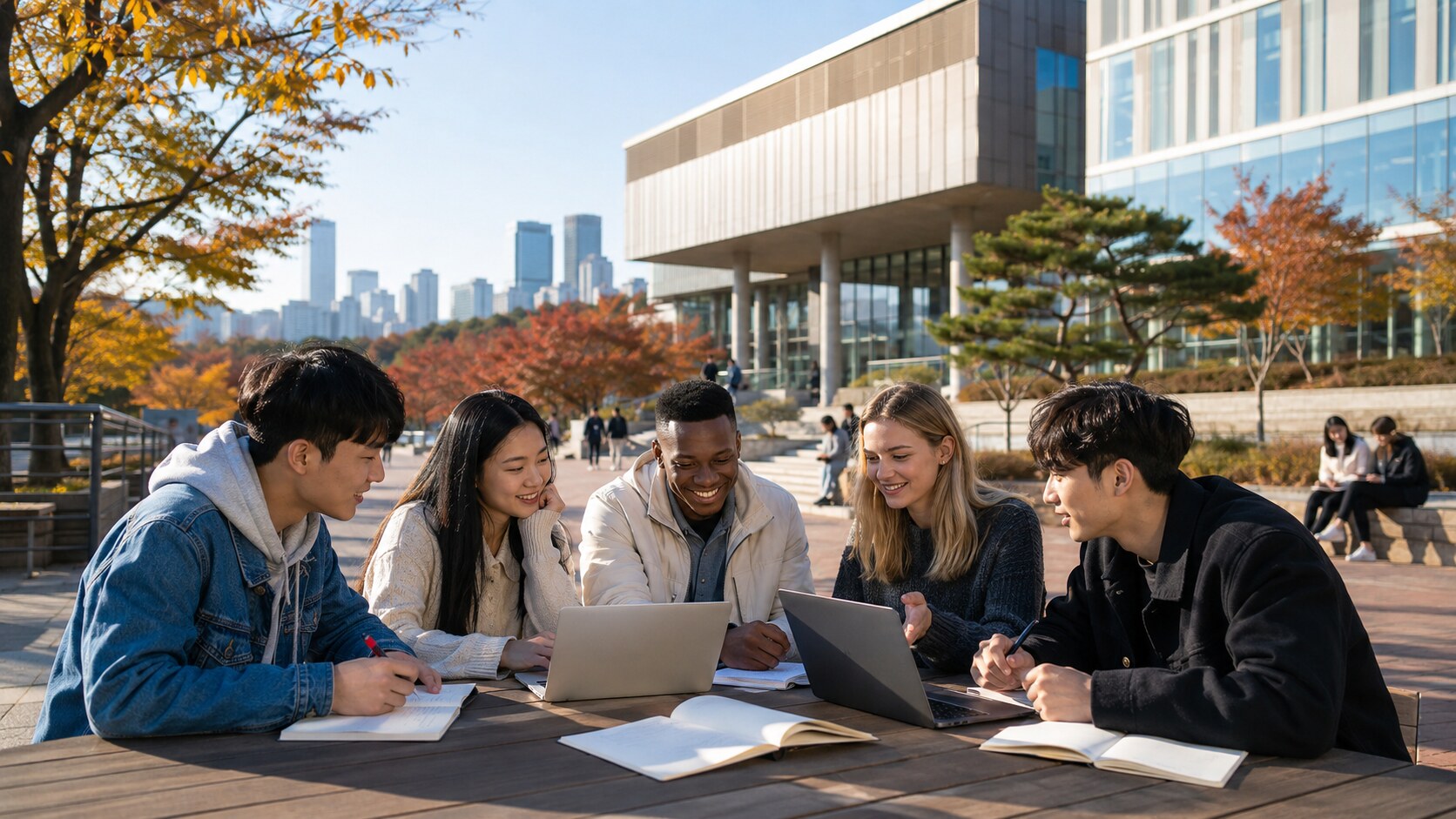
Updated August 2026. South Korea has become one of Asia’s fastest-growing international study destinations. Its universities offer strong programs in technology, engineering, business, media, design and Korean studies, while government and university scholarships can substantially reduce tuition.
South Korea combines major research universities, advanced digital infrastructure and close links to global technology, manufacturing and cultural industries. Seoul attracts the greatest attention, but institutions in Busan, Daejeon, Daegu, Gwangju and other regions may provide lower living costs and generous scholarships.
The government-run Study in Korea portal provides university, program, scholarship and admissions information. In 2025, the country recorded 253,434 international students across university, graduate and training programs, up from 208,962 in 2024.
There is no single tuition price. Fees depend on whether the university is public or private, its location, degree level and subject. Humanities and social-science programs are commonly less expensive than engineering, arts, laboratories and medicine.
The official Study Expenses in Korea page provides current planning information, while individual university profiles list program-level tuition. Always confirm whether a figure is per semester or per year and whether it includes admission fees.
Your first-year plan should include application fees, tuition, dormitory or rental deposits, insurance, books, visa and residence costs, transportation and an emergency reserve.
Seoul generally has the highest housing costs. University dormitories can be the simplest option for a new arrival, but places may be limited. Off-campus housing can require a substantial deposit under Korea’s wolse rental system.
Students should compare dormitory fees, meal plans, utilities, transport and housing deposits. A lower-cost university outside Seoul can offer better overall value even if its tuition is similar.
The Global Korea Scholarship is the principal government scholarship for international students. Depending on the program, support may include airfare, Korean-language training, tuition and a monthly allowance. The application route, eligible countries and annual quotas can change, so applicants should follow the official Study in Korea scholarship notices.
University scholarships are also important. The government portal states that many universities provide awards covering 30–100% of tuition based on academic performance. Some use admission results, GPA or TOPIK level, and renewal may depend on maintaining a required grade.
Do not assume a scholarship automatically renews. Check the exact percentage, duration, housing support, GPA conditions and whether the award applies to the admission fee.
South Korean universities increasingly offer English-track degrees and individual courses in English. Nevertheless, applicants should verify how much of the entire degree—not merely a few modules—is delivered in English.
Korean-taught programs generally require evidence such as a TOPIK score. Even in an English-track degree, Korean skills can improve access to internships, part-time work, social life and graduate employment.
Degree students generally apply for D-2 status, while many Korean-language students use D-4 status. Requirements depend on the program and diplomatic mission but commonly include admission documents, proof of finances, passport materials and evidence of tuition payment.
Korea’s official visa portal explains that an online e-form may still need to be printed and submitted with supporting documents at a diplomatic mission. Use the official Korea Visa Portal and instructions from your local embassy or consulate.
Part-time work is regulated. Eligibility and permitted hours can depend on visa status, study level, Korean proficiency and university or immigration approval. Do not begin work based only on advice from an employer or another student. Confirm current rules through your university and Korean immigration first.
South Korea is particularly attractive to ambitious students who value technology, urban life and a fast-moving academic environment. Students willing to develop Korean ability will gain the widest range of experiences. Compare it with our guides to studying in Japan, studying in Taiwan and Taiwan vs. Japan vs. South Korea.
Visit Global School Scout’s South Korea guide to learn more about education and opportunities.


Site help, FAQs, blogs, and how our Scouts work