
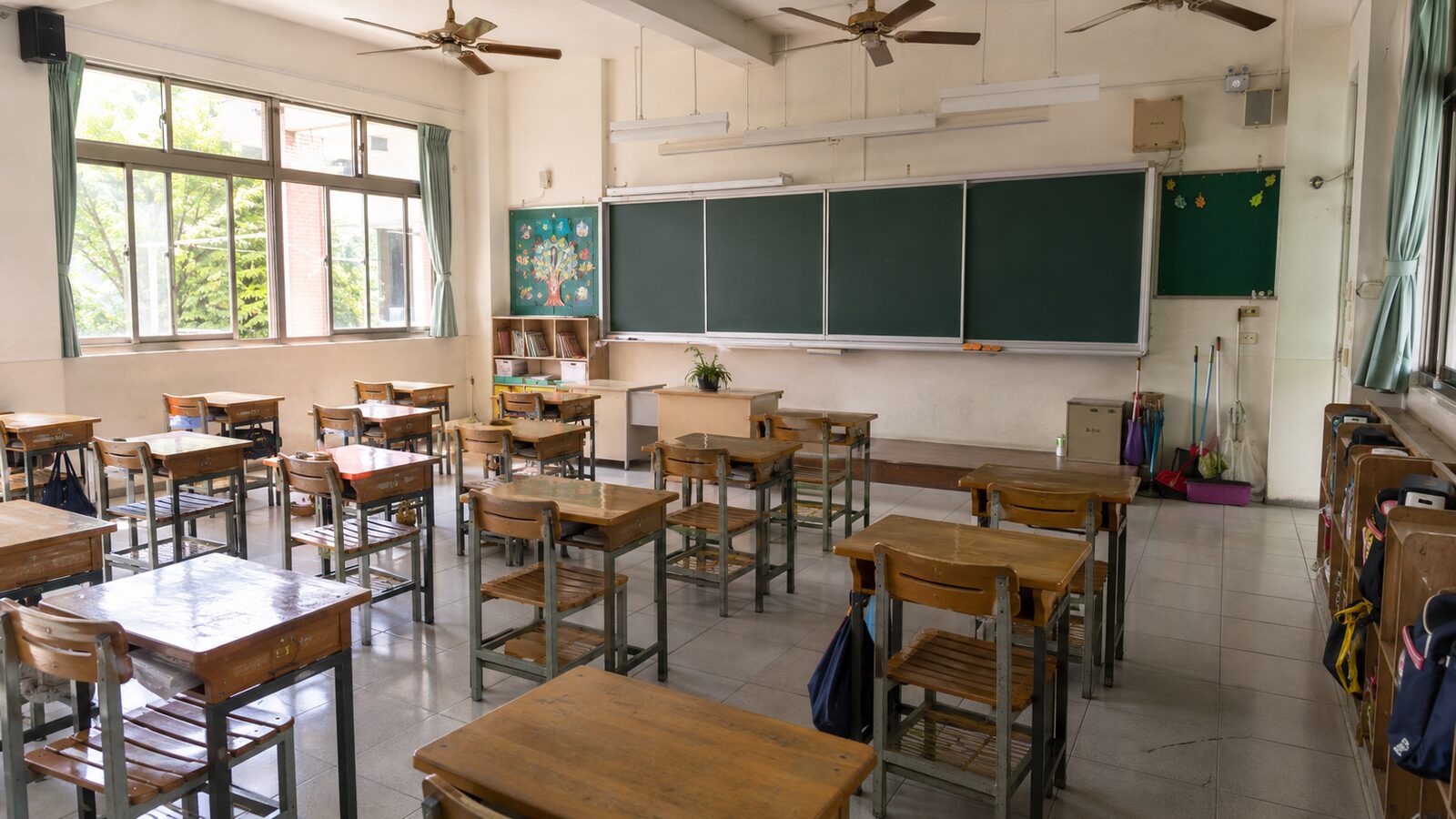
Taiwan's public-school recruitment programs offer foreign English teachers a structured route into elementary and secondary education. Unlike many private language-school positions, these jobs normally follow government qualification rules, published salary bands, and formal school-year contracts.
For 2026, Taiwan's Ministry of Education announced plans to recruit 980 foreign English teachers and teaching assistants. Applications are accepted on a rolling basis until available positions are filled, so candidates should prepare their documents before waiting for a particular school vacancy.
This guide explains the current eligibility rules, salary structure, application documents, and practical questions to ask before accepting a Taiwan public-school offer.
Foreign teachers may be placed in public elementary or secondary schools through the Taiwan Foreign English Teacher Program (TFETP), local education departments, or approved recruitment partners. Exact duties vary by school.
A foreign English teacher may:
Some schools use a co-teaching model, while others give the foreign teacher greater responsibility for particular classes. Candidates should ask how lessons are divided before signing a contract.
The Ministry of Education's 2026 recruitment information requires applicants to hold a bachelor's degree or higher and meet the program's nationality and professional-qualification rules.
Applicants generally need a passport from a country where English is an official or commonly used language, or another passport accepted under Taiwan's relevant foreign-affairs criteria. They must also satisfy one of the approved professional routes.
The clearest route is a valid government-issued teaching licence or certificate. Some candidates may qualify through relevant accredited-school experience combined with an education- or English-related degree and at least 120 hours of approved methodology training. An approved TESOL, TEFL, or CELTA qualification may also satisfy a stated route when all other conditions are met.
Because eligibility depends on the exact document and issuing authority, do not assume that every online TEFL course or substitute-teaching credential will be accepted. Submit scans for review before paying for authentication or travel.
Applicants also need a criminal-record check issued within the required validity period. The 2026 program information specifies a check issued within the preceding six months.
Taiwan's public-school salary scale is tied to two important factors:
The Ministry of Education published the following monthly ranges for 2026:
| Highest degree | Monthly salary range |
|---|---|
| Bachelor's degree | NT69, 880–NT91,470 |
| Master's degree | NT77, 960–NT101,750 |
| Doctorate | NT81, 360–NT107,150 |
A master's or doctorate can therefore place a teacher on a higher degree scale. However, the top of a range is not an automatic starting salary. The employer must also recognize the teacher's qualifying experience.
Under the published rules, countable experience generally means full-time teaching at an eligible public or state school outside or inside Taiwan, or at a registered private primary or secondary school in Taiwan. Experience of less than one full year may not count. Experience completed without a valid teaching licence may also be excluded when the licence was required.
Candidates should request a written salary calculation showing:
This matters because two teachers with the same degree can receive different offers based on documented experience.
Depending on the program and contract, public-school packages may include:
Benefits are not identical across every local authority or school. Confirm the amount, payment timing, receipt requirements, and repayment conditions for each benefit.
Public-school recruitment involves more documentation than many private-school applications. A typical file may include:
Experience letters should clearly state the employer, school type, full-time status, exact employment dates, and teaching position. A vague reference letter may not be enough to establish salary credit.
Start early. Criminal checks and authenticated documents often take longer than the application form itself.
Applications may be reviewed on a rolling basis, and placements continue until positions are filled. The largest intake normally aligns with the school year beginning around August, but later vacancies and replacement roles can appear.
A practical timeline is:
Early applicants generally have more time to solve document problems and compare locations.
Taipei and New Taipei offer extensive transport and international amenities, but housing costs are higher. Taoyuan, Taichung, Tainan, and Kaohsiung combine large-city services with different costs and commuting patterns. Rural and offshore placements may offer lower living costs and closer school communities, but teachers should examine transport, housing, and access to medical services.
Before accepting, ask:
Public schools and private language centers serve different needs. Public-school positions usually offer daytime schedules, longer classes, larger groups, and formal documentation requirements. Buxibans often hire throughout the year and may accept a wider range of applicants, but evening and weekend hours are common.
Neither label guarantees a good workplace. Research the individual school, speak to a current teacher when possible, and make sure every promised benefit appears in the written contract.
Legitimate employers should be able to identify the school, explain the legal work-permit process, and provide a contract before asking you to relocate. Be cautious if a recruiter:
Use Global School Scout's school profiles and reviews to research employers, then compare the offer against the current government rules.
Explore teaching jobs in Taiwan, review the Teaching in Taiwan guide, and use the Global School Scout school directory before accepting an offer. Teachers can also create a profile to prepare for applications.
Requirements, salary schedules, and available placements can change. Always confirm the current terms with the hiring authority and the school named in your contract.


Site help, FAQs, blogs, and how our Scouts work