
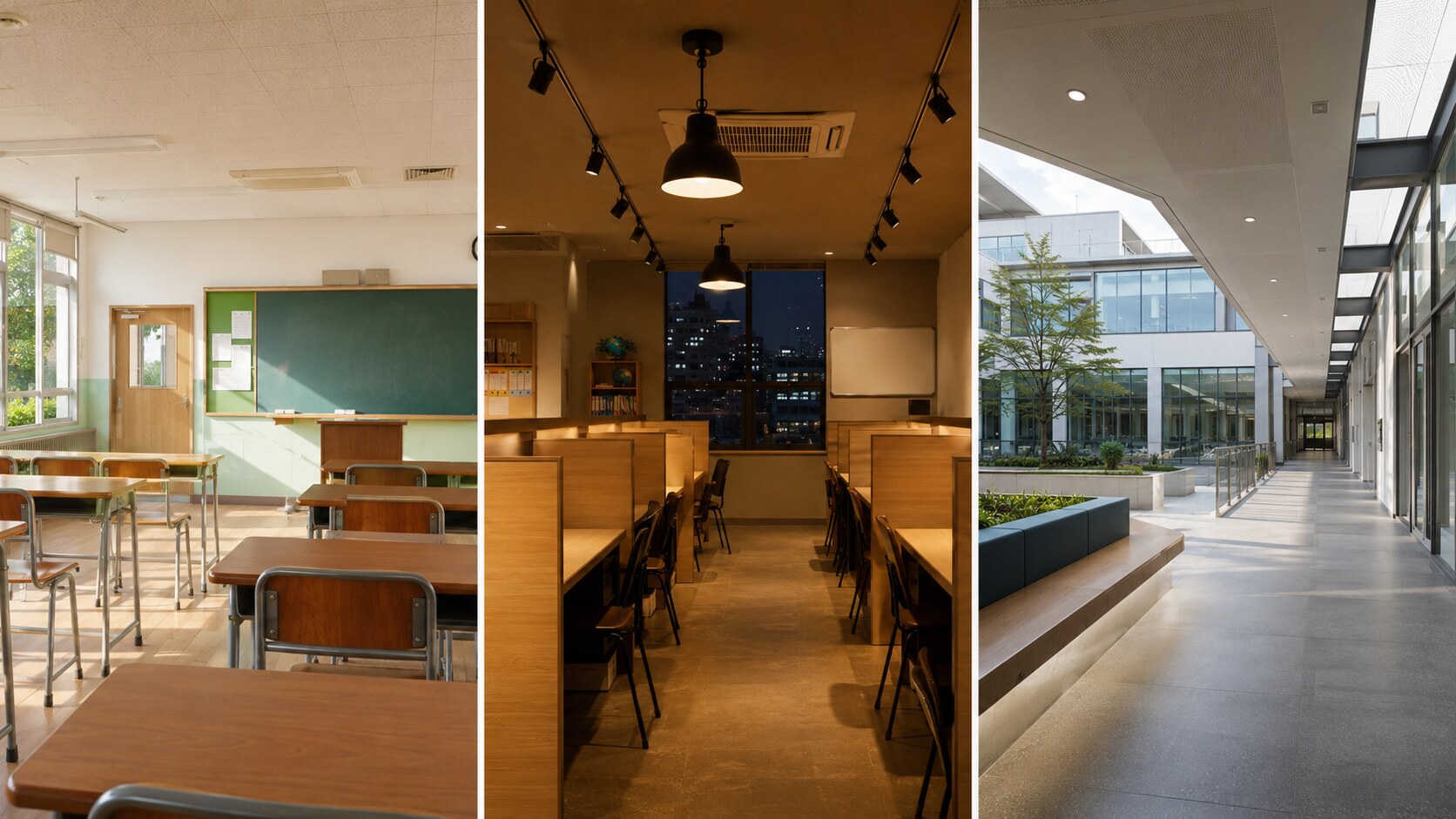
South Korea does not have one single teaching market. Public-school programs, private academies, and international schools recruit different candidates, follow different calendars, and offer very different working environments. Applying without understanding those differences wastes time and can lead teachers toward jobs that do not match their qualifications.
This guide compares the three main routes so applicants can focus on the part of the Korean market where they are most competitive.
Public-school roles are structured and usually involve co-teaching English during regular daytime hours. National programs such as EPIK recruit for major spring and autumn intakes. Placement location is not always guaranteed, and teachers may work across more than one school.
Hagwons are private academies. They recruit throughout the year and commonly offer afternoon and evening schedules. Conditions vary significantly by branch and owner, making contract review and employer research especially important.
International schools teach broader academic curricula such as IB, British, American, or Canadian programs. They normally seek licensed teachers with relevant classroom experience. Recruitment often begins many months before the academic year starts.
Public-school positions are attractive to teachers who value predictable daytime schedules, national holidays, and a defined placement structure. EPIK is the best-known centralized route, although some education offices and recruiters may operate additional channels.
According to EPIK's official eligibility guidance, applicants generally need at least a bachelor's degree. Candidates whose degree or licence is not education-related normally need a TEFL, TESOL, or CELTA certificate of at least 100 hours. EPIK also sets citizenship and English-education requirements for its program.
The role is usually closer to English-language support and co-teaching than ownership of a full international curriculum. Candidates should be comfortable collaborating with Korean colleagues and adapting lessons to local school needs.
Hagwons offer the largest variety of entry-level English-teaching jobs. Recruitment continues throughout the year because academies have different start dates and replacement needs.
A typical schedule may begin in the afternoon and finish in the evening. Some employers provide housing or an allowance, airfare support, pension contributions, health insurance, and severance; the details must be checked in the written contract.
The name of a national brand does not guarantee that every campus operates identically. Ownership, management, curriculum, class size, preparation time, and communication practices can differ by branch. Research the exact campus rather than relying only on the franchise name.
Before signing, use the GSS guide to checking a South Korean hagwon contract.
International-school teaching is a separate professional market. Schools normally expect a recognized teaching licence or certification, relevant subject or grade-level experience, and evidence of successful work in accredited schools. Competitive schools may prefer two or more years of post-qualification experience.
Roles include elementary homeroom, secondary subject teaching, learning support, counselling, leadership, and specialist positions. Teachers usually take responsibility for planning, assessment, reporting, parent communication, safeguarding, and extracurricular activities.
Hiring frequently begins from October through February for positions starting the following July or August, although late vacancies occur. Applicants should prepare references, licence copies, degree documents, police checks, and a curriculum-focused résumé well before peak recruitment.
A higher monthly number can be misleading if one offer requires substantially more contact hours, unpaid preparation, weekend events, or expensive self-arranged housing. Compare the entire package:
A public-school application should emphasize adaptability, communication, and English-learning support. A hagwon résumé should show classroom energy, reliability, and experience with the relevant ages. An international-school application must demonstrate curriculum knowledge, assessment, safeguarding, collaboration, and measurable student learning.
Start with the Teaching in South Korea guide, browse South Korea teaching jobs, and research exact campuses through the GSS school directory. Applicants targeting the next public-school intake can also read the EPIK Spring 2027 application guide.
Visa eligibility depends on the role, employer, applicant, and current Korean immigration rules. Confirm work authorization with the hiring school and the appropriate Korean authority.


Site help, FAQs, blogs, and how our Scouts work