
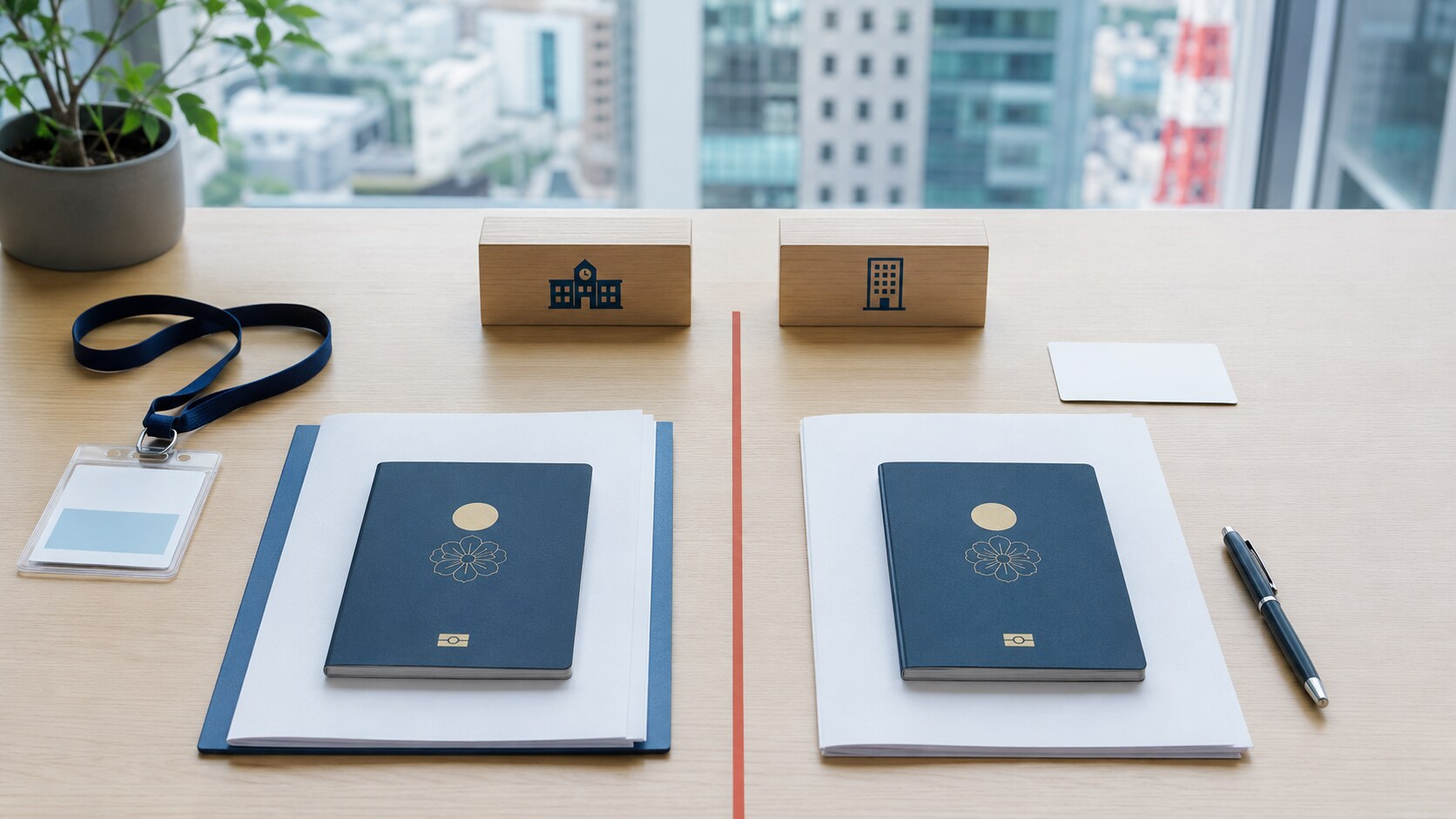
Teachers often say they need a "teaching visa" for Japan, but Japan uses different residence statuses for different types of work. Two common categories appear in education hiring: Instructor and Engineer/Specialist in Humanities/International Services.
The correct status depends on the actual employer and duties, not the title used in an advertisement.
Instructor generally covers instruction at schools within Japan's formal school system, including many elementary, junior-high and high-school roles. This is the status commonly associated with assistant language teachers working in public schools.
An employer or dispatch company should explain which institution employs you, where you will teach and how the duties match the approved activity.
This broader status can cover work requiring specialist knowledge or an international-services component. Many private language-school and eikaiwa positions are sponsored under this category because the employing organization and work do not fall within the same formal-school framework as a public-school instructor position.
The label does not make one job better than another. It describes the authorized activity.
International-school sponsorship can depend on the school's legal status and the employee's real responsibilities. Classroom teaching, curriculum work, translation, marketing and administrative duties should not be treated as interchangeable. Ask the school which status it intends to sponsor and why the position qualifies.
For many hires from overseas, the employer or representative applies in Japan for a Certificate of Eligibility. After issuance, the teacher normally uses it in the visa process through the appropriate Japanese embassy or consulate. A Certificate of Eligibility supports the application but does not guarantee the final decision.
Teachers already in Japan may need an extension, change of status or notification connected to a new employer. The correct route depends on current status and new duties.
Be cautious when an employer says any work visa is sufficient, asks you to start before authorization is in place, cannot identify the legal employing entity, or describes substantial duties that do not match the sponsored role. Also avoid assuming that permission to work part-time or as a dependent covers full-time teaching.
Compare the visa explanation with the contract, job description, school type and work location. Keep copies of every document submitted. Never hand over an original passport or degree indefinitely, and request a receipt whenever an original must be inspected.
Immigration decisions are case-specific. Use this guide to ask better questions, then verify the current process with Japan's Immigration Services Agency or the appropriate embassy or consulate.
Explore more: Teaching in Japan, Japan teaching jobs, When to Apply for International School Jobs in Japan, and the GSS résumé builder.
Sources: Immigration Services Agency status overview, Japan immigration system reference.


Site help, FAQs, blogs, and how our Scouts work