
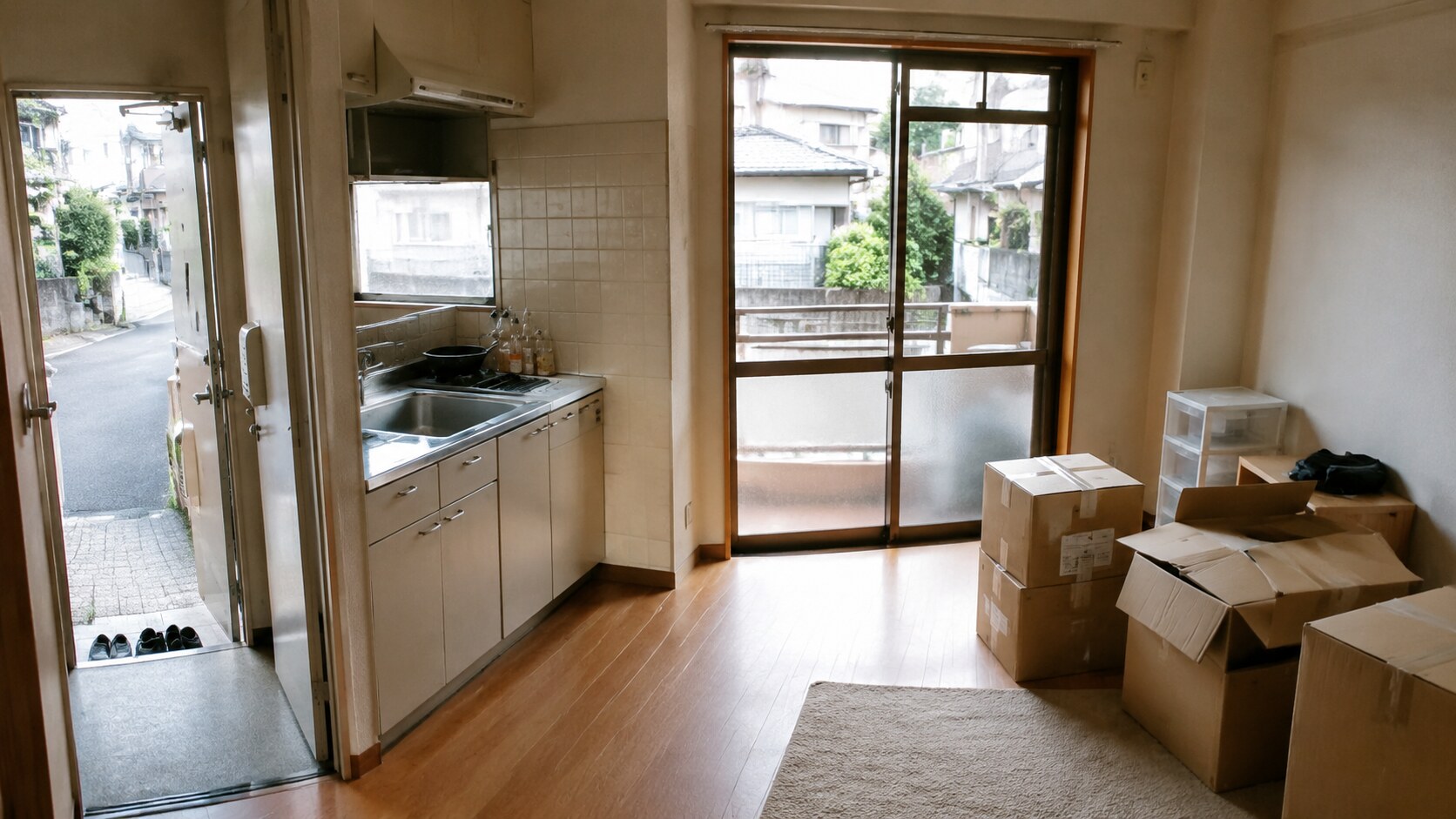
Finding an apartment can be one of the most confusing parts of moving to Japan for a teaching job. Some employers arrange housing before arrival, while others provide only limited support. Teachers who rent independently may face deposits, key money, agency fees and guarantor requirements that make the first month far more expensive than the monthly rent suggests.
This guide explains the main housing routes, common fees and questions foreign teachers should resolve before signing a teaching contract.
ALT dispatch companies, boards of education, language schools and private employers sometimes arrange an apartment for incoming teachers. This can reduce the difficulty of applying from overseas and may eliminate the need to communicate with landlords in Japanese.
Convenience does not always mean low cost. The teacher may still pay rent, utilities, cleaning fees and deposits through payroll deductions. Some employers place teachers in furnished units inherited from previous staff, while others use commercial apartments or company leases.
Ask for the address or approximate neighborhood, rent, floor plan, furniture list, commute time and every expected deduction. If the employer cannot provide the exact unit early, request typical examples and a maximum monthly cost.
Independent renting gives teachers more control over location, building quality and space, but the process can be harder for a new arrival. Some landlords do not accept overseas applicants, and many leases require a guarantor or guarantor company.
Foreign-resident-friendly agencies, multilingual property services and government-managed UR Housing can expand the available options. UR properties are known for not charging key money or agency commission, although availability, income screening and location vary.
A security deposit is held against damage or unpaid rent. Part may be returned after cleaning and restoration charges are deducted.
Key money is a non-refundable payment to the landlord. Not every apartment charges it, and renters can search specifically for properties advertised without key money.
A real-estate agency may charge a commission for arranging the lease. Confirm whether consumption tax is added.
Many landlords require a guarantor company. The initial fee is often based on a percentage of the monthly rent, followed by annual renewal or monthly charges.
Fire insurance, lock replacement, professional cleaning and administrative fees can appear separately. Request an itemized move-in estimate before agreeing to the property.
Traditional rentals can require several months of rent upfront when all charges are combined. Teachers moving independently should keep a substantial arrival fund rather than budgeting only for the first month's rent.
Rent depends on city, distance from a station, building age and apartment size. A compact one-room unit in a regional city may cost around JPY 40,000 to JPY 70,000 per month. Similar apartments in Tokyo or central Osaka can cost JPY 70,000 to JPY 120,000 or more.
Lower rent may come with a longer commute. When comparing housing, include train or bus costs and check whether the employer reimburses transportation. A rural placement may require a car, adding parking, insurance and maintenance expenses.
Apartment listings often show floor area in square metres and may describe rooms in tatami-mat units. Photos can make a small apartment look larger, so rely on the floor plan and measurements.
Standard Japanese rentals may not include furniture, appliances, curtains or light fixtures. A lower monthly rent can be offset by the cost of buying a refrigerator, washing machine, bed, table and household equipment.
Employer housing and short-term apartments are more likely to be furnished, but confirm exactly what remains in the unit. Used-goods stores, local community groups and departing teachers can help new arrivals furnish an apartment inexpensively.
Electricity, gas and water are normally paid separately. Gas may be city gas or more expensive propane, depending on the building. Internet may be included, available through the building or require a separate installation contract.
Teachers should also ask about garbage rules, bicycle parking, pet restrictions, noise expectations and whether the building has bicycle or car parking fees.
Employer-controlled housing can create complications if a contract ends early. Ask how quickly the apartment must be vacated, whether rent is deducted from the final salary and who pays cleaning or cancellation charges.
If the teacher signs the lease directly, check the notice period and early-termination clause. Japan's teaching calendar and apartment lease date may not align, so a teacher may owe rent after the last working day.
Employer-arranged housing can make arrival much easier, but teachers should still treat it as part of the compensation package and examine every cost. Independent renting offers more choice, but requires preparation, cash and careful reading of the lease.
Search teaching jobs in Japan and compare schools and employers on Global School Scout before relocating.
Rental practices and fees vary by property and region. Confirm the current lease terms and total move-in cost with the landlord or agency.


Site help, FAQs, blogs, and how our Scouts work