
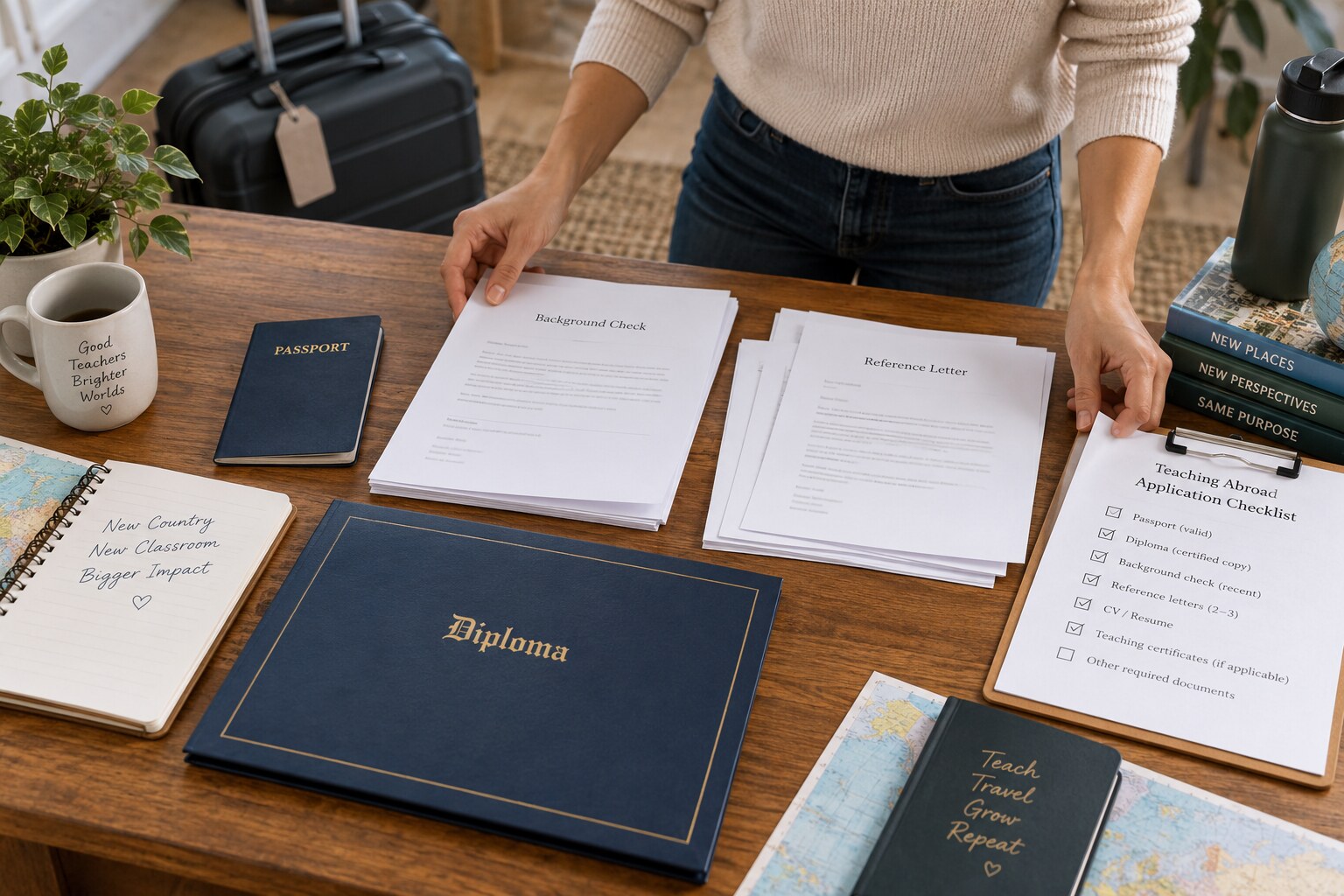
Teaching abroad usually involves two separate document checks: the school evaluates whether you can do the job, and immigration authorities determine whether you qualify for the visa or work permit. Preparing both sets early can prevent missed start dates and expensive last-minute replacements.
Requirements differ by country, nationality and role, so treat this as a planning checklist and confirm the final list with the employer and the relevant government office.
A plain photocopy may not be enough. Some countries require notarisation, authentication, apostille certification, consular legalisation or a certified translation. These terms are not interchangeable. Ask exactly which process applies, which original document must be used and how recent it must be.
Do not authenticate every document automatically. Processing the wrong version can waste time and money. First obtain a written list from the school or official visa authority.
Confirm whether the check must be national or local, which country should issue it and how long it remains valid. Teachers who have lived in multiple countries may be asked for more than one. Start early because fingerprints, mailing and authentication can add weeks.
International schools may contact referees directly and ask about student safety, professional conduct and employment dates. Tell your referees to expect the request. Never alter a reference letter or submit one without the writer's permission.
Keep a private master folder with high-quality colour scans and a tracker showing issue date, expiry date, authentication status and destination. Use clear filenames. Store sensitive documents securely and send them only through verified employer or government channels.
Confirm who pays for authentication, medical checks, visa fees and dependant processing. Ask whether originals must be mailed and when they will be returned. A legitimate school should be able to explain its process clearly.
Use Global School Scout to find teaching jobs abroad and research schools before sharing sensitive documents.


Site help, FAQs, blogs, and how our Scouts work