
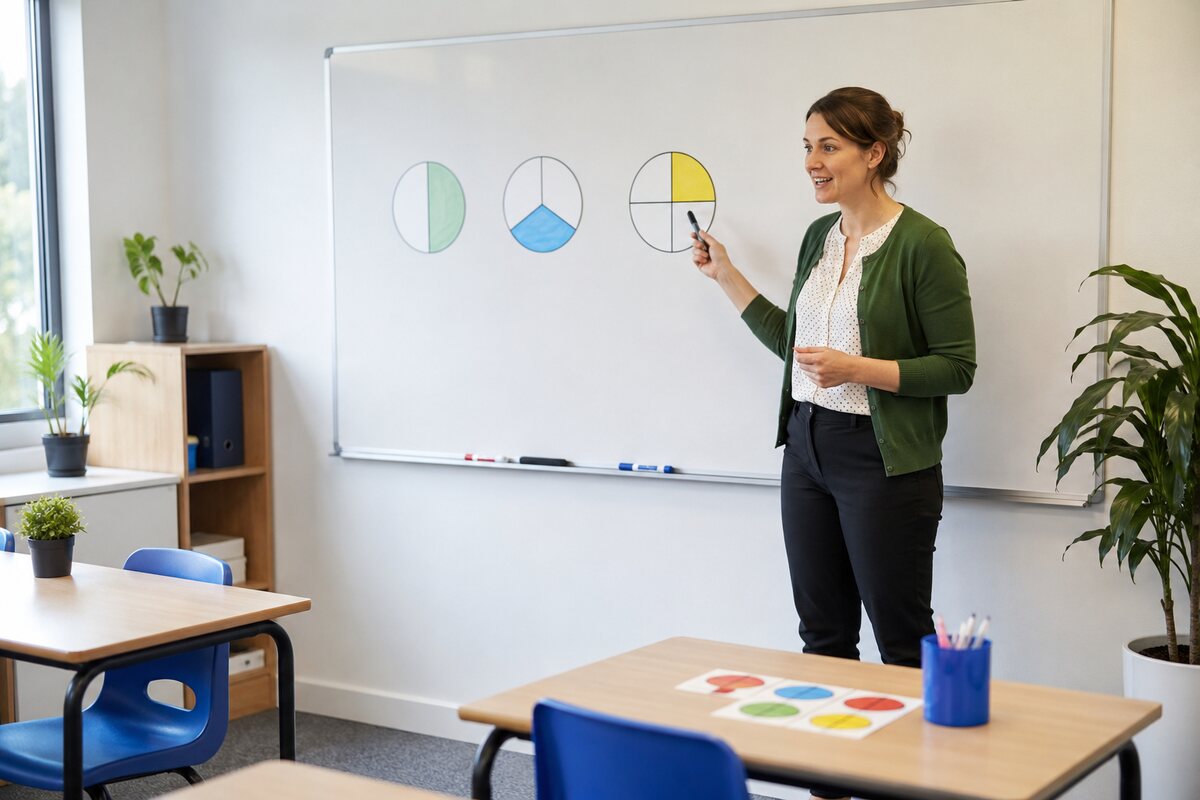
A demo lesson for a teaching interview is a short opportunity to show how you help learners understand something. The strongest preparation starts with one manageable learning goal, a clear activity, and a way to check understanding. You do not need to squeeze a full unit into a few minutes.
This guide includes a sample 15-minute plan, adjustments for online interviews, and questions to prepare for afterward. The plan is an original practice example, not a school's required format. Follow the brief you receive and adapt the content to the learners.
Confirm the duration, subject, age group, prior learning, and available resources. Ask whether you will teach students, adults acting as students, or an empty room for a recording. Those are different tasks.
NYC Teaching Fellows advises candidates to ask about the class, lesson time, and learner needs before preparing a demonstration. For an international school, also clarify the teaching language and any language-support needs relevant to the activity.
If the school cannot provide detail, state your assumptions in the plan and prepare a quick opening check. Do not assume learners have already covered a topic because of their age alone.
A broad theme such as fractions is not a workable goal for a short demonstration. A narrower aim might be: identify one half and one quarter of equal-sized shapes and explain which is larger.
Plan backward from the evidence you want. If students only colour shapes, you may not know whether they understand equal parts. Include a question that requires them to explain why a picture represents a particular fraction.
Topic: comparing one half and one quarter. Assumption: learners have encountered equal parts. Resources: equal-sized paper circles, a marker, and a short independent task. Adjust the goal if the opening check shows the prerequisite is missing.
Show one shape divided into equal parts and another into unequal parts. Ask which could be used to show halves and why. Invite explanations rather than accepting only a quick choice. State the goal in language the learners can understand.
Fold equal-sized circles into two and four equal parts. Shade one part of each and compare them. Make the condition explicit: the wholes are the same size. Model a short explanation connecting the number of equal parts to the size of one part.
Give pairs a small set of pictures to sort. Include an unequal-parts example so students must think about the definition rather than match colours. Ask one learner to explain and the other to check the reasoning.
Listen for the misconception that a larger denominator always means a larger piece. If it appears, return to the folded circles before adding a new example.
Ask each learner to identify a half and a quarter in a fresh pair of equal-sized shapes, then explain the comparison. Offer a spoken response or a sentence starter where appropriate without supplying the mathematical reasoning.
Review one correct explanation and one misconception without embarrassing anyone. Ask a final transfer question using a different shape. End by naming what the evidence suggests should happen next: more work on equal parts or a new comparison.
If the task takes longer than expected, reduce the number of practice examples rather than removing the independent check entirely. This is a flexible sequence, not a script to complete regardless of student responses.
Prepare vocabulary and visuals for learners who need language support. Let them point, manipulate a shape, or explain orally before writing. Keep the mathematical goal visible so language difficulty is not mistaken for lack of understanding.
For learners ready to extend, ask them to create a misleading fraction picture and explain what is wrong with it. A deeper explanation is often more useful than simply giving extra questions.
Use the support arrangements supplied by the school. Do not diagnose learners or decide their needs from one brief interaction.
Test screen sharing, camera position, audio, and how students will respond. Large, simple visuals are easier to follow than a crowded slide. Keep a copy of your materials available offline and practise explaining the activity without relying on animations.
If the panel is acting as students, clarify whether it wants realistic participation or a commentary on your teaching decisions. If nobody is participating, explain where you would pause for a response and how different answers would change your next step. Do not invent successful student responses and present them as evidence.
For a recorded submission, follow the school's consent and recording instructions. Do not record or share identifiable pupils simply to strengthen an application.
The discussion is a chance to show professional judgement. Separate what you observed from what you hoped would happen. Practise answering:
Illustrative reflection: Most responses identified equal parts, but the independent task showed that some learners still compared the numbers rather than the pieces. I would use another concrete comparison before moving to a written rule. I would also shorten my opening explanation to leave more time for individual responses.
Avoid choosing too many objectives, talking through every minute, or making the task depend on unfamiliar technology. Do not mistake busy students for secure understanding. Equally, do not abandon a useful learning check just to reach your final slide.
Bring a plan you understand well enough to adapt. A copied activity becomes a problem when you cannot explain its purpose, prerequisite knowledge, or next step.
For the wider interview, read our international school teacher interview questions and answers. Explore GSS teacher career support for interview preparation, or browse teaching vacancies that match your experience. Preparation can strengthen your application but does not guarantee a job offer.


Site help, FAQs, blogs, and how our Scouts work